
To Contact: +91-9810753843, +91-6388422267
By Appointment Only:
Medicos Surgical Clinic, #6, Sector 11 A, Chandigarh, Monday to Friday, 4-7pm
AORTIC ATHEROSCLEROSIS & RENOVASCULAR HYPERTENSION
Aortic atherosclerosis means hardening and narrowing of the aorta (the main blood vessel carrying blood from the heart to the whole body) due to fatty deposits called plaques building up inside its wall.
Renovascular hypertension is high blood pressure caused by narrowing of the kidney arteries (renal arteries), usually due to atherosclerosis.

FAQS
Why does aortic atherosclerosis happen?
It usually develops slowly over many years and is caused by:
-
High cholesterol
-
High blood pressure
-
Diabetes
-
Smoking
-
Obesity
-
Lack of exercise
-
Increasing age
What problems can aortic atherosclerosis cause?
Depending on where the plaques are, it can lead to:
-
Reduced blood flow to organs
-
Stroke (if plaques travel to the brain)
-
Heart disease
-
Poor blood flow to legs causing pain while walking
-
Kidney problems and high blood pressure
What are the symptoms?
Many people have no symptoms initially. When symptoms occur, they may include:
-
Chest or back pain
-
Leg pain while walking
-
Dizziness or stroke symptoms
-
Poor kidney function
How is aortic atherosclerosis diagnosed?
Doctors may use:
-
Ultrasound
-
CT scan or CT angiography
-
MRI
-
Blood tests for cholesterol and sugar levels
How is aortic atherosclerosis treated?
Treatment focuses on:
-
Lifestyle changes (healthy diet, exercise, stop smoking)
-
Medications to control cholesterol, blood pressure, and diabetes
-
Surgery or stenting in severe cases where blood flow is badly reduced
Renovascular Hypertension – Questions & Answers
What is renovascular hypertension?
Renovascular hypertension is high blood pressure caused by narrowing of the kidney arteries (renal arteries), usually due to atherosclerosis.
Why does narrowing of kidney arteries cause high blood pressure?
When kidneys receive less blood, they think the body’s blood pressure is low.
So they release hormones that increase blood pressure, leading to persistent or difficult-to-control hypertension.
What causes renovascular hypertension?
Common causes include:
-
Atherosclerosis (most common in older adults)
-
Fibromuscular dysplasia (more common in younger people)
-
Long-standing diabetes and smoking
Who should be suspected to have renovascular hypertension?
It may be suspected if:
-
Blood pressure is very high or difficult to control
-
Blood pressure worsens suddenly
-
Kidney function worsens after starting BP medicines
-
One kidney is smaller than the other
What are the symptoms?
Most people have no specific symptoms apart from:
-
High blood pressure
-
Headache or dizziness
-
Swelling of legs or face (in advanced cases)
How is renovascular hypertension diagnosed?
Doctors may perform:
-
Doppler ultrasound of renal arteries
-
CT angiography or MR angiography
-
Renal artery angiography (gold standard)
How is renovascular hypertension treated?
1. Medical treatment
-
Blood pressure medicines
-
Cholesterol-lowering drugs
-
Control of diabetes and lifestyle changes
2. Endovascular treatment
-
Angioplasty and stenting of the renal artery in selected patients
3. Surgery
-
Reserved for severe or complex cases when other treatments fail
Can renovascular hypertension be cured?
In many patients, treatment can:
-
Improve blood pressure control
-
Protect kidney function
-
Reduce the need for multiple BP medicines
Early diagnosis gives the best results.
Key Takeaway
Aortic atherosclerosis and renovascular hypertension are closely linked conditions caused by plaque buildup in major blood vessels.
Early detection, lifestyle changes, proper medications, and timely intervention can prevent serious complications like stroke, kidney failure, and heart disease.
Aortic Atherosclerosis – Surgery, Techniques & Outcomes (Q&A)
When is surgery needed in aortic atherosclerosis?
Surgery or intervention is needed when:
-
Blood flow to vital organs is significantly reduced
-
There is risk of stroke, organ damage, or limb ischemia
-
Symptoms persist despite medicines
-
There is associated aortic aneurysm or severe narrowing
What surgical or interventional options are available?
1. Endovascular (Minimally Invasive) Treatment
This is the most commonly used approach today.
Techniques include:
-
Balloon angioplasty – widens the narrowed segment
-
Stent placement – keeps the artery open using a metal mesh tube
Advantages:
-
Small puncture, no big incision
-
Less pain and faster recovery
-
Short hospital stay
2. Open Aortic Surgery
Used when disease is extensive or complex.
Techniques include:
-
Aortic endarterectomy – removal of plaque from inside the artery
-
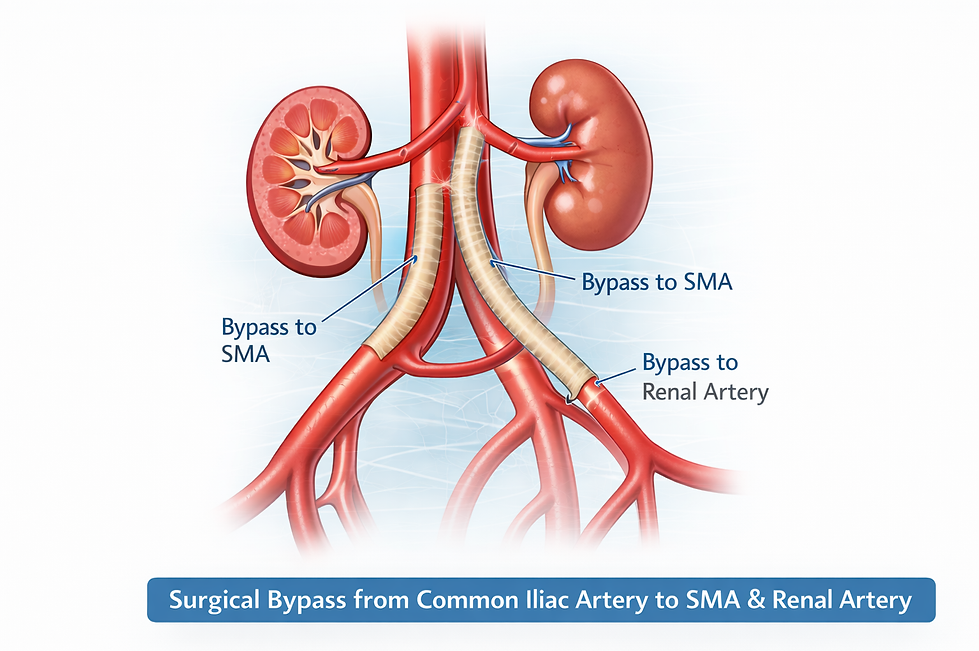
Bypass surgery – blood flow is diverted around the blocked segment using a graft
When is open surgery preferred?
-
Long-segment blockages
-
Associated aneurysm
-
Failed endovascular procedures
What are the outcomes of surgery for aortic atherosclerosis?
-
Significant improvement in blood flow
-
Reduction in risk of stroke and organ damage
-
Relief of symptoms like leg pain or abdominal pain
-
Good long-term results when combined with lifestyle changes
Most patients return to normal activity within days to weeks, depending on the procedure.
Renovascular Hypertension – Surgery, Techniques & Outcomes (Q&A)
When is surgery or intervention needed for renovascular hypertension?
Intervention is considered when:
-
Blood pressure is difficult to control with medicines
-
Kidney function is worsening
-
Recurrent episodes of sudden breathlessness (flash pulmonary edema)
-
Narrowing of kidney artery is severe
What are the surgical and interventional treatment options?
1. Renal Artery Angioplasty and Stenting
This is the treatment of choice in most patients.
Technique:
-
A thin tube (catheter) is passed through the groin or wrist
-
A balloon widens the narrowed artery
-
A stent is placed to maintain blood flow
Benefits:
-
Minimally invasive
-
Rapid improvement in kidney blood flow
-
Often reduces number of BP medicines
2. Open Renal Artery Surgery
Used in selected patients.
Techniques include:
-
Renal artery bypass
-
Endarterectomy
-
Re-implantation of renal artery
Indications:
-
Complex or multiple blockages
-
Failed stenting
-
Associated aortic disease needing open surgery
What improvement can be expected after surgery?
Blood Pressure Outcomes
-
Many patients have better BP control
-
Some require fewer medicines
-
Complete cure of hypertension is possible in selected cases
Kidney Function Outcomes
-
Stabilization or improvement of kidney function
-
Prevention of further kidney damage
Is surgery safe?
Yes, when done in experienced centers:
-
High success rates
-
Low complication risk
-
Careful patient selection improves results
Long-Term Results and Follow-Up
-
Regular follow-up with BP checks and scans
-
Lifelong control of cholesterol, sugar, and smoking cessation
-
Most stents remain open for many years
Key Message for Patients
Surgery and minimally invasive procedures play a crucial role in treating advanced aortic atherosclerosis and renovascular hypertension.
With modern techniques, patients experience safer procedures, faster recovery, better blood pressure control, and protection of vital organs.
CONSULT WITH EXPERTS
BY APPOINTMENT ONLY:
MEDICOS SURGICAL CLINIC, #6, SEC 11A, CHANDIGARH, MONDAY TO FRIDAY 5-7PM
CONTACT +91-9810753843