
GIANT ABDOMINAL TUMORS

Updated: Feb 5
Our patient was a 30-year-old who presented with lump in the abdomen for the past 6 months with significant loss of weight. Hailing from Kullu in Himachal and consults from multiple doctors did not alleviate his symptoms and he consulted us. He was investigated thoroughly and diagnosed with a rare tumor arising from the stomach. On operation, complete tumor removal necessitated a portion of stomach as well as colon to be resected according to oncological guidelines.
He was diagnosed with a Giant GIST of stomach and on a follow up of 2 years is recurrence free.
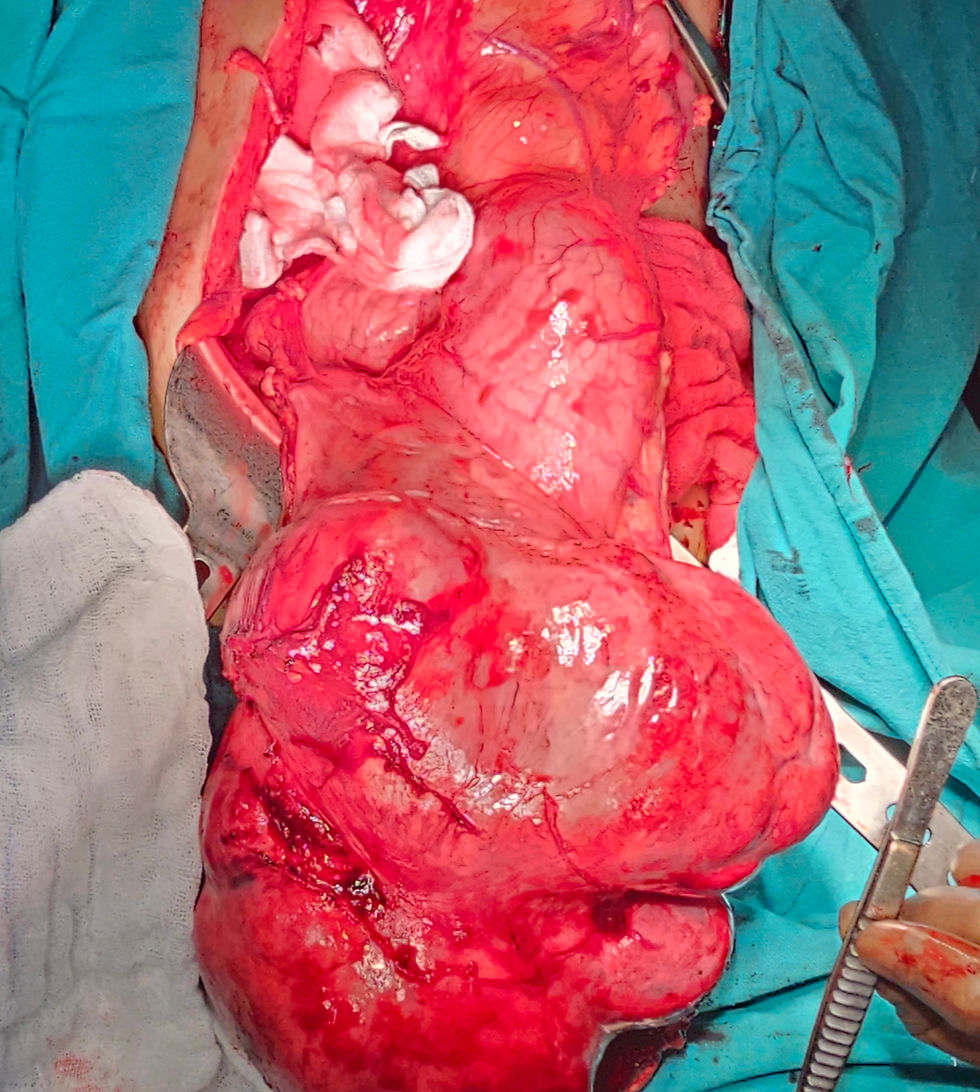
GIST OF STOMACH WITH COLON INVOLVEMENT
FAQ
What is a GIST?
A GIST (Gastrointestinal Stromal Tumor) is a rare type of growth (tumor) that starts from the supporting tissues of the digestive system.When it develops in the stomach, it is called a gastric GIST.
If the tumor becomes very large (usually more than 10 cm), it is called a giant GIST.
Why does it happen?
It happens because of a change in certain cells of the stomach
These cells start growing more than normal
It is not caused by food habits
It is not contagious
Most cases are not inherited
What symptoms can it cause?
A giant GIST may grow slowly, so symptoms appear late. Common symptoms are:
Pain or discomfort in the upper part of the abdomen
A feeling of heaviness or swelling in the belly
Feeling full after eating small amounts
Vomiting or nausea
Passing black stools or vomiting blood (due to bleeding)
Weakness and tiredness (due to anemia)
Weight loss
Sometimes, it is found accidentally during scans done for other problems.
How is it diagnosed?
Doctors may use:
CT scan or MRI to see the size and spread
Endoscopy to look inside the stomach
Biopsy to confirm the diagnosis
Special tests show the tumor is a GIST
Is giant GIST cancer?
Some GISTs behave like cancer and some do not
A giant GIST has a higher chance of being serious
Early treatment gives better results
How is it treated?
Surgery (Main treatment)
Complete removal of the tumor by surgery is the best treatment
Doctors try to remove it without breaking the tumor
Nearby organs may be removed if the tumor is stuck to them
Usually, lymph nodes do not need to be removed
Medicines (Targeted therapy)
A special medicine called Imatinib is used
It helps to:
Shrink the tumor before surgery
Reduce the chance of the tumor coming back after surgery
Treatment may be needed for months or years
What is the outcome?
GIST of the stomach usually has a better outcome compared to other areas
With proper surgery and medicines, many patients live long and healthy lives
Regular follow-up is very important
Follow-up care
Patients need:
Regular check-ups
CT scans every few months
Long-term monitoring to detect recurrence early
In simple words
Giant GIST is a large, rare stomach tumor
Symptoms often appear late
Surgery and special medicines give good results
Early diagnosis and regular follow-up are important


Comments